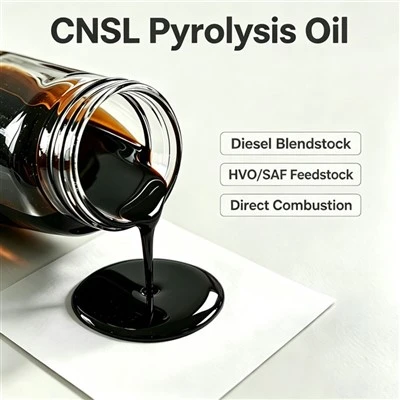
CNSL Biofuel for Power Plant
Q: Can CNSL be used directly as biofuel for power plant?
A: Crude CNSL is not advised for direct pure combustion. Refined CNSL / Heavy Cardanol is suitable, normally applied via blending for power‑plant combustion systems.
Q: How does CNSL biofuel compare with other biofuels for power generation?
A: As liquid agro‑waste bio‑oil, CNSL‑based fuel avoids food‑feedstock conflict. It offers better handling convenience than solid biomass like wood pellets for liquid‑fuel‑oriented power‑plant boilers.
Q: How much carbon emission reduction can CNSL‑based biofuel achieve for power plants?
A: As agro‑waste‑origin liquid biofuel, refined CNSL / Heavy Cardanol delivers significant lifecycle greenhouse‑gas reduction compared with coal and heavy fuel oil. Actual carbon‑reduction value depends on feedstock origin, refining process and co‑firing proportion. It helps power‑plant assets meet local renewable energy and decarbonization policy requirements.
Q: Do I need large‑scale equipment modification when applying CNSL biofuel for existing power plant boilers?
A: For low‑percentage blending projects, major boiler hardware modification is usually unnecessary. Minor upgrades may include fuel pre‑heating unit, improved filters and fuel pipeline corrosion protection. 100% pure combustion will require comprehensive boiler redesign, which is not economically common for most existing power plants.
Q: Is CNSL‑based biofuel for power plant available for small‑scale captive power plants?
A: Yes. Refined Heavy Cardanol is well‑suited for small‑scale captive power plants, industrial CHP and distributed power facilities. It can replace partial fossil fuel for combined heat‑and‑power production for factories, as long as matching pre‑heating and filtration setup is installed.
Q: Does CNSL‑based power plant biofuel have relevant sustainability certification options?
A: CNSL / Heavy Cardanol belongs to waste‑stream advanced biofuel. It can apply for international sustainable bio‑fuel certification according to regional requirements. Buyers shall verify feedstock traceability documentation to confirm it originates from cashew‑processing waste without competing against food crops.